Why Four Stages, Not One: The Logic Behind A Multi-Stage Approach
Male vitality concerns rarely stem from a single cause. A formula built around four connected stages reflects that reality better than a single-ingredient approach.
Understanding why testosterone, circulation, hormonal balance and recovery are treated as separate but connected stages explains the reasoning behind this structure.
Why one mechanism rarely tells the whole story
Declining energy, stamina and drive in men are commonly linked to several overlapping factors: naturally declining testosterone with age, reduced circulation efficiency, shifting hormone-binding dynamics, and slower recovery from physical and mental stress. A formula targeting only one of these factors addresses just part of the picture.
Stage 1 and 2: production and delivery
Testosterone optimization (Stage 1) addresses how much of the hormone the body produces and how much remains metabolically available. Blood flow support (Stage 2) addresses circulation, relevant to how effectively the body delivers oxygen and nutrients that support physical performance and stamina.
Stage 3 and 4: balance and sustainability
Hormonal balance and prostate health (Stage 3) address a different variable: how much of the testosterone already present remains active rather than bound and inactive by SHBG. Energy recovery (Stage 4) addresses sustainability — whether gains in the other three areas can actually translate into consistent, day-to-day energy rather than short bursts.
What this structure does not resolve
A logical four-stage structure does not, by itself, guarantee effective doses of each ingredient. Undisclosed amounts remain a real limitation regardless of how coherent the overall framework is. The structure is a reasonable strategy; verifying its execution requires checking each ingredient's specifics, which we do on our ingredients page.
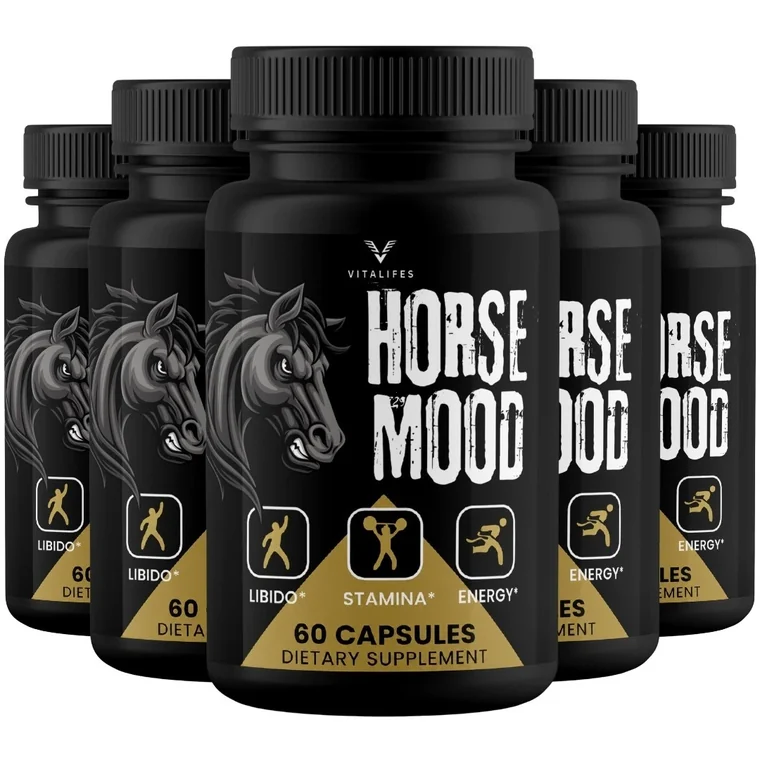
Applying this to Horsemood
Horsemood's four-stage structure — testosterone, blood flow, hormonal balance, and recovery — reflects genuine physiological reasoning rather than an arbitrary marketing framework. See our piece on Tongkat Ali for how Stage 1 specifically holds up to research scrutiny.