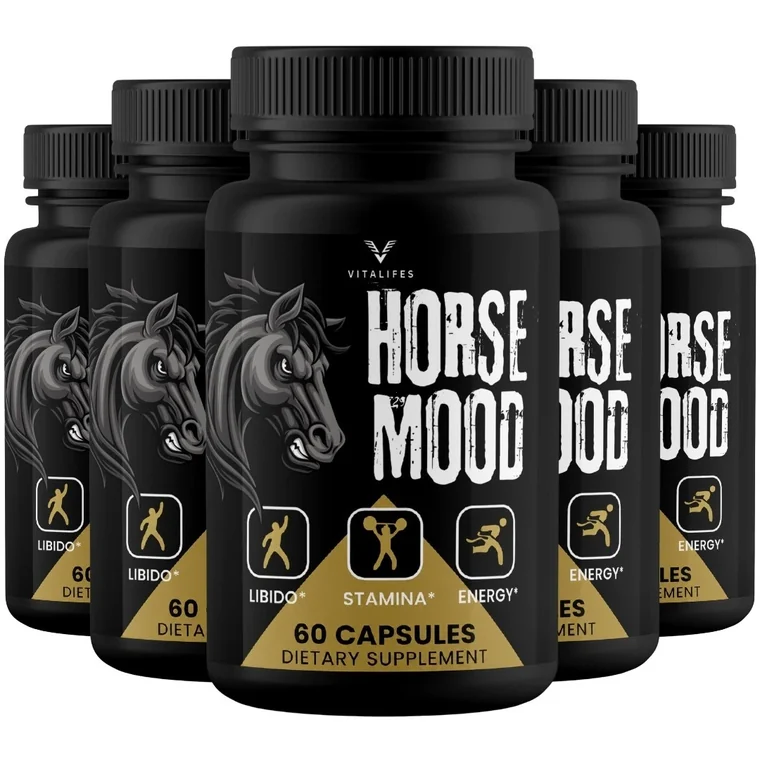
Tongkat Ali & Testosterone: What The Evidence Shows
Tongkat Ali (Eurycoma longifolia) is one of the more researched botanicals in the male vitality category, with a genuine research history spanning several decades.
Understanding what the studies actually measured, and their honest limits, sets realistic expectations for this ingredient's role in a formula like Horsemood.
What Tongkat Ali is
Tongkat Ali, also known as Eurycoma longifolia, is a root native to Southeast Asia, traditionally used for supporting energy and vitality. It is considered adaptogenic, meaning it is traditionally believed to help the body adapt to physical and mental stress.
What the research shows
Studies summarized on PubMed Central have examined Tongkat Ali's relationship with testosterone levels, generally finding associations between supplementation and modest increases in testosterone markers, particularly in men with lower baseline levels or under physical stress. Some research has also connected it with reduced cortisol, the body's primary stress hormone, which may relate to its traditional use for fatigue.
The honest limits
Much of the available research uses specific standardized extracts at defined doses, and sample sizes in many studies are modest. Results are generally described as measurable but not dramatic, consistent with how a nutritional ingredient (rather than a pharmaceutical intervention) is expected to perform.
Why it's often paired with Boron
Boron Chelate is a mineral studied for its role in testosterone metabolism, including potential effects on free testosterone availability. Pairing it with Tongkat Ali targets two different aspects of the same testosterone pathway — production support and metabolic availability — which is a coherent formulation strategy.
Applying this to Horsemood
Horsemood pairs Tongkat Ali with Boron Chelate as the foundation of its first stage, testosterone optimization. The specific amount of Tongkat Ali used is not disclosed on the label, which is worth keeping in mind when weighing expectations — see our piece on why the formula uses four stages rather than betting on one ingredient.